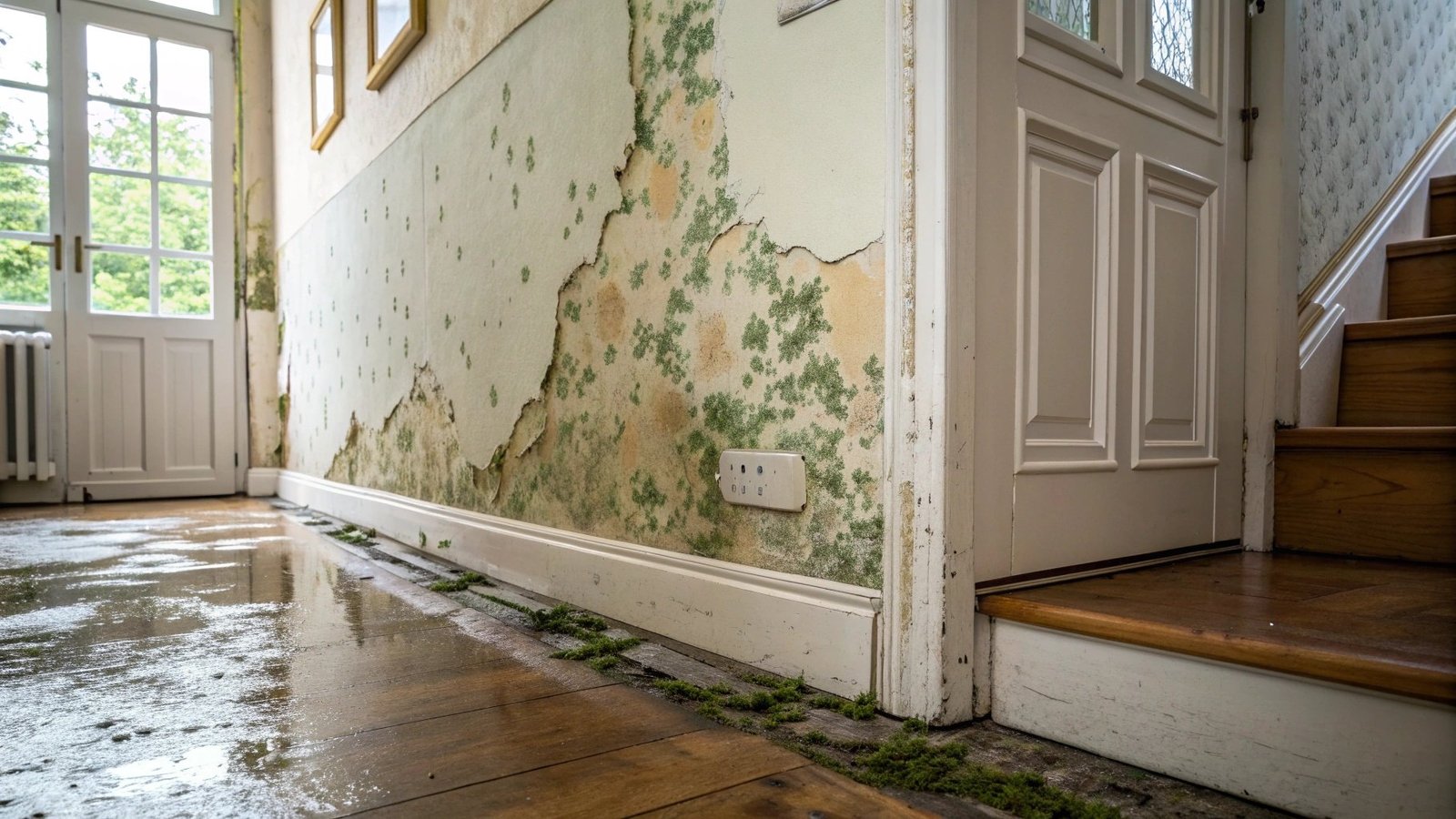
Damp affects thousands of residential properties across Luton and Bedfordshire every year. As experienced building surveyors, we identify damp issues during virtually every comprehensive property survey. Understanding the different types of damp, how to spot them, and what treatment options work best can save you thousands in repair costs.
The Three Types of Damp
Not all damp is the same. Our chartered surveyors categorize damp into three distinct types, each with different causes and requiring different treatment approaches.
Rising Damp
Rising damp occurs when groundwater moves upward through walls via capillary action. Most properties built after 1875 have damp proof courses (DPCs) designed to prevent this, but these can fail or become bridged over time.
Key indicators our building surveyors look for:
- Tide marks on walls, typically up to 1 meter high
- Peeling paint or wallpaper at skirting board level
- Damp patches that don't go higher than 1-1.5 meters
- Salt deposits on walls (efflorescence)
- Rotting skirting boards and floor timbers
- Musty smell in rooms
Common causes:
- Failed or absent damp proof course
- Bridged DPC (soil, rendering, or debris touching wall above DPC level)
- Damaged or deteriorated DPC materials
- Ground levels raised above DPC over time
Penetrating Damp
Penetrating damp happens when water enters through walls, roofs, or around windows from outside. Unlike rising damp, it can occur at any height and often worsens during wet weather.
Signs identified during Level 2 and Level 3 surveys:
- Damp patches appearing after rainfall
- Staining that tracks horizontally or diagonally
- Damp affecting upper floors or specific wall sections
- Mold growth on walls and ceilings
- Deteriorating plaster or render
Common sources our property consultants investigate:
- Damaged or missing roof tiles and slates
- Blocked or leaking gutters and downpipes
- Cracked or porous brickwork
- Failed pointing between bricks
- Damaged render or external coating
- Defective flashings around chimneys
- Poorly sealed windows and doors
Condensation
Condensation is the most common damp problem in modern properties. It occurs when warm, moisture-laden air meets cold surfaces, causing water droplets to form.
Typical signs:
- Water droplets on windows, especially in morning
- Mold growth in corners and on cold walls
- Black mold on window frames and reveals
- Damp patches on walls with poor ventilation
- Musty smell in poorly ventilated rooms
- Problems worse in winter months
Contributing factors:
- Inadequate ventilation
- Poor heating
- Lifestyle factors (drying clothes indoors, cooking without extraction)
- Solid wall construction with no insulation
- Sealed windows with no trickle vents
How Building Surveyors Detect Damp
During property surveys across Bedfordshire, our RICS-accredited surveyors use several methods to identify and assess damp:
Visual Inspection
Experienced eyes spot the tell-tale signs of damp quickly. We look for staining patterns, peeling decorations, damaged plaster, and mold growth. The location and pattern of dampness often reveals its cause.
Moisture Meters
Electronic moisture meters measure water content in walls, floors, and timbers. We use two types:
- Resistance meters: Use pins inserted into materials to measure electrical resistance
- Capacitance meters: Scan surfaces without damage to detect moisture
Readings above 20% typically indicate a damp problem requiring investigation.
Thermal Imaging
For comprehensive building surveys, we often use thermal imaging cameras. These reveal damp areas as cool spots because water evaporation cools surfaces. This technology is particularly useful for identifying hidden leaks and penetrating damp sources.
Salt Analysis
Hygroscopic salts left by evaporated groundwater can cause continued dampness even after the source is treated. Laboratory analysis of wall samples identifies these salts, helping our building surveyors recommend appropriate treatment.
Treatment Solutions for Different Damp Types
Effective damp treatment depends on accurate diagnosis. Here's what works for each type:
Treating Rising Damp
Chemical Damp Proof Course Injection: The most common treatment involves injecting silicone or water-based cream into holes drilled in the wall at DPC level. This creates a water-repellent barrier.
Cost: £500-£1,500 for a typical room, including replastering with specialist salt-resistant render.
Physical DPC Installation: In some cases, a physical membrane can be inserted into the wall. This is more invasive but sometimes necessary for severe cases.
Important: Any treatment must include replastering affected areas with specialist render that prevents salt migration.
Treating Penetrating Damp
Treatment focuses on stopping water ingress at source:
- Roof repairs: Replace damaged tiles, repair flashings, clear gutters - £200-£2,000 depending on extent
- Repointing: Restore mortar between bricks - £50-£100 per square meter
- Render repairs: Patch or replace damaged render - £500-£3,000
- Gutter cleaning/replacement: £100-£800
- Window sealing: £50-£200 per window
Often, penetrating damp resolves once the source is fixed and the building dries out naturally.
Treating Condensation
Condensation usually doesn't require expensive treatment:
- Improve ventilation: Install extractor fans in kitchens and bathrooms (£100-£300 each)
- Add trickle vents: Install in windows (£30-£60 per window)
- Improve heating: Maintain consistent temperatures
- Insulation: Insulate cold walls internally or externally (£500-£5,000 depending on property)
- Dehumidifiers: Short-term solution (£100-£300 for good quality unit)
Lifestyle changes often help: open windows daily, use extractor fans when cooking or showering, dry clothes outside when possible, and keep furniture away from external walls.
Damp and Property Surveys
When our chartered surveyors identify damp during Level 2 homebuyers surveys or Level 3 building surveys, we include it in our comprehensive report using the traffic light system:
- Green (1): Minor condensation requiring improved ventilation
- Amber (2): Moderate damp requiring treatment but not urgent
- Red (3): Serious damp affecting structural timbers or extensive areas
We provide advice on likely causes, recommended investigations (specialist damp surveys if needed), and approximate treatment costs. This information helps you negotiate the purchase price or decide whether to proceed.
Common Damp Myths Debunked
As property consultants, we encounter many misconceptions about damp:
Myth: All Old Houses Have Damp
Reality: While older properties are more prone to damp, well-maintained Victorian and Edwardian properties across Luton can be completely damp-free. Good maintenance and appropriate repairs prevent most damp problems.
Myth: Damp Proof Course Injection Never Works
Reality: When properly installed with correct preparation and replastering, chemical DPC injection is effective. Problems arise when cowboys skip proper preparation or use incorrect materials.
Myth: Waterproof Paint Solves Damp
Reality: Waterproof paint only masks damp temporarily. It traps moisture in walls, potentially causing more damage. Our building surveyors always recommend treating the cause, not the symptom.
Myth: Damp Meters Are Always Accurate
Reality: Moisture meters can be affected by salts in walls, giving false high readings. Experienced chartered surveyors interpret readings alongside visual inspection and other evidence.
Preventing Damp in Your Property
Prevention is always better than cure. Our surveyors recommend:
Regular Maintenance
- Clean gutters and downpipes twice yearly
- Check and repair roof tiles promptly
- Repoint brickwork as needed
- Maintain render and external paint
- Keep ground levels below DPC
- Ensure airbricks remain clear
Good Ventilation
- Open windows daily for at least 15 minutes
- Use extractor fans when cooking or showering
- Don't block air vents
- Avoid drying clothes on radiators without ventilation
Heating Strategy
- Maintain consistent low heating rather than short high bursts
- Heat rooms to at least 18°C in winter
- Don't turn heating completely off when away
When to Call Chartered Surveyors
If you're buying property in Bedfordshire, always commission a professional survey. Our Level 2 surveys identify damp issues in standard properties, while Level 3 building surveys provide detailed analysis for older or problematic properties.
For existing homeowners, contact building surveyors if you notice:
- New damp patches appearing
- Increasing mold growth
- Musty smells
- Peeling decorations
- Rotting woodwork
Early detection and treatment prevent expensive damage to your property's structure and your family's health.
Health Implications of Damp
Damp isn't just a property issue – it affects health too. Prolonged exposure to damp and mold can cause or worsen:
- Respiratory problems
- Asthma and allergies
- Skin irritation
- Weakened immune system
This makes prompt treatment essential, especially in homes with children, elderly residents, or those with existing health conditions.
Key Takeaways
- Three main damp types: rising damp, penetrating damp, and condensation
- Each requires different treatment approaches
- Professional surveys identify damp accurately using multiple methods
- Treatment costs vary from hundreds to thousands depending on severity
- Prevention through good maintenance is most cost-effective
- RICS chartered surveyors provide expert advice during property purchases
Concerned About Damp in Your Property?
Our RICS chartered surveyors provide comprehensive damp assessments during Level 2 and Level 3 surveys across Luton, Bedfordshire, and surrounding areas. We identify all types of damp, explain the causes, and recommend appropriate treatment solutions.
Get Your Property Survey Quote