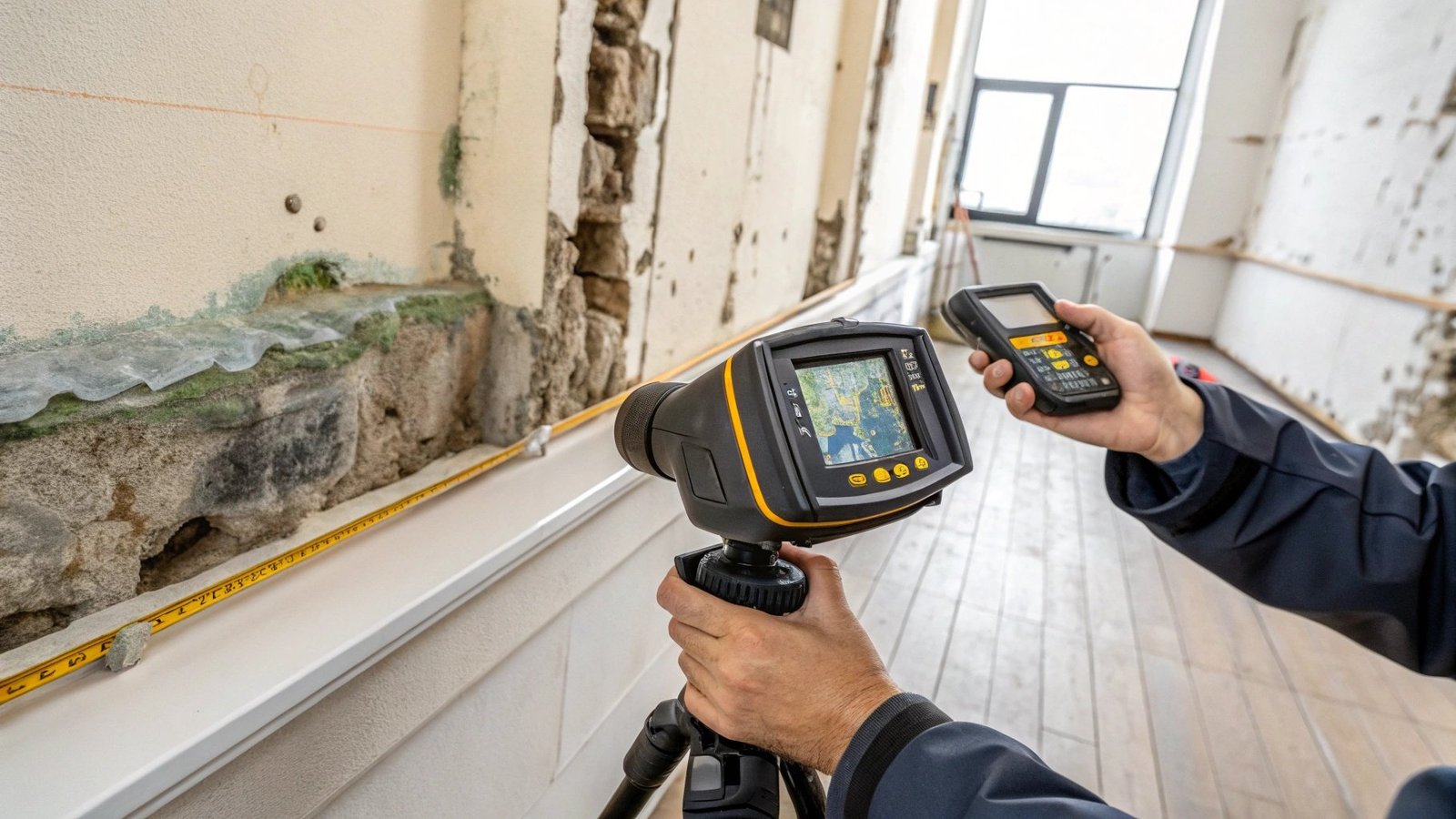
Thermal imaging cameras reveal hidden defects invisible to the naked eye. As building surveyors conducting comprehensive property surveys across Luton and Bedfordshire, we use thermal imaging technology to identify damp, insulation problems, and structural issues. This guide explains how thermal imaging improves property surveys and what our chartered surveyors can detect.
What Is Thermal Imaging?
Thermal imaging (also called infrared thermography) uses specialized cameras to detect heat patterns. Every object emits infrared radiation proportional to its temperature. Thermal cameras visualize these temperature differences as color-coded images, revealing variations invisible to normal sight.
Our RICS-accredited surveyors use professional-grade thermal imaging cameras during Level 2 and Level 3 building surveys, adding valuable diagnostic capability to traditional inspection methods.
How Thermal Imaging Works in Property Surveys
The science is straightforward: different materials and conditions affect surface temperatures. Thermal cameras detect these variations:
- Damp areas appear cooler because water evaporation cools surfaces
- Missing insulation shows as warmer areas in winter (heat escapes)
- Air leaks create temperature differences around windows and doors
- Hidden structural issues may show temperature patterns
- Heating system problems reveal as unexpected temperature distributions
Our chartered surveyors interpret thermal images alongside visual inspection, moisture meter readings, and experience to provide accurate assessments.
What Thermal Imaging Detects in Properties
During property surveys across Bedfordshire, our building surveyors use thermal imaging to identify:
1. Hidden Damp and Moisture
How it works: Damp areas evaporate moisture, cooling the surface. Thermal imaging reveals these cool spots before visible signs appear.
What we detect:
- Rising damp spreading behind plaster
- Penetrating damp from external wall defects
- Leaking pipes hidden in walls or floors
- Roof leaks tracking through structure
- Condensation patterns in cold spots
Benefits: Early detection prevents expensive damage. Our property consultants identify damp sources before decorations fail or structural timbers rot.
2. Missing or Inadequate Insulation
How it works: Heat escapes through poorly insulated areas, showing as warmer surfaces on thermal images in winter.
What we find:
- Missing loft insulation sections
- Gaps in cavity wall insulation
- Thermal bridging through solid elements
- Inadequate insulation around windows
- Floor insulation problems
Value: Buyers understand energy efficiency issues and can budget for improvements. Poor insulation affects heating costs significantly.
3. Air Leakage and Drafts
How it works: Cold air infiltration creates temperature differences visible on thermal images.
Common locations:
- Around window and door frames
- At floor-wall junctions
- Through electrical socket back boxes
- Around loft hatches
- At service penetrations
Significance: Air leakage wastes energy and creates drafts. Identifying sources helps prioritize draught-proofing work.
4. Underfloor Heating Issues
Detection capability: Thermal imaging reveals underfloor heating pipe layouts and identifies non-functioning sections or leaks.
What our building surveyors check:
- Even heat distribution across floors
- Cold spots indicating broken pipes
- Hot spots suggesting leaks or circulation problems
- System coverage and design
5. Electrical Hot Spots
Safety benefit: Thermal imaging identifies electrical components running hot, suggesting overloading, poor connections, or impending failure.
What we check:
- Consumer unit (fuse box) temperatures
- Individual circuit breakers
- Socket outlets under load
- Distribution boards
Importance: Hot electrical components create fire risks. Early identification allows remedial work before failure.
6. Structural Issues
Application: Some structural problems create temperature patterns:
- Cavity wall ties corroding (thermal bridging)
- Concrete lintel corrosion (temperature differences)
- Hidden steel beam locations
- Structural movement affecting insulation
Our chartered surveyors use thermal imaging as one tool among many for assessing structural condition.
Limitations of Thermal Imaging
While powerful, thermal imaging has limitations our RICS-accredited surveyors understand:
Environmental Conditions Matter
Thermal surveys work best with temperature differences between inside and outside. Ideal conditions require:
- At least 10°C temperature difference (inside vs. outside)
- Stable conditions for several hours before survey
- No direct sunlight on surveyed surfaces
- Dry weather (surface water affects readings)
Winter surveys often produce better results than summer surveys for insulation and air leakage detection.
Surface Phenomenon Only
Thermal cameras detect surface temperatures only. They don't "see through" walls. What's visible is surface temperature variation, not necessarily what's behind the wall.
Interpretation Requires Expertise
Thermal images can be misleading without proper interpretation. Our building surveyors combine thermal imaging with:
- Visual inspection
- Moisture meter readings
- Building knowledge and experience
- Understanding of construction methods
Not a Substitute for Comprehensive Survey
Thermal imaging enhances surveys but doesn't replace traditional inspection methods. It's one tool in our surveyors' comprehensive assessment approach.
The Thermal Imaging Survey Process
When our chartered surveyors incorporate thermal imaging into property surveys:
Pre-Survey Preparation
- Property heated to normal living temperature
- Windows and doors closed for several hours
- Heating running before survey
- Furniture moved away from external walls if possible
During Inspection
- Systematic scanning of all external walls
- Ceiling inspection for insulation problems
- Floor checks for underfloor heating or damp
- Detailed examination of problem areas identified
- Correlation with traditional survey findings
Reporting
- Thermal images included in survey report
- Interpretation explaining what images show
- Recommendations for further investigation if needed
- Cost implications of identified issues
Benefits for Property Buyers
Thermal imaging in property surveys provides several advantages:
Hidden Defect Detection
Problems invisible to visual inspection become apparent, preventing expensive surprises after purchase.
Energy Efficiency Assessment
Understanding insulation and air leakage helps buyers anticipate heating costs and improvement budgets.
Negotiation Evidence
Thermal images provide compelling visual evidence of defects, strengthening negotiation positions with sellers.
Maintenance Planning
Identifying issues early allows proper planning and budgeting for repairs and improvements.
Peace of Mind
Comprehensive inspection using modern technology gives buyers confidence in their purchase decision.
Cost Considerations
Thermal imaging surveys typically cost slightly more than standard surveys:
- Standard Level 2 survey: £400-£800
- Level 2 with thermal imaging: £500-£950
- Level 3 building survey with thermal imaging: £800-£2,000+
The additional cost is modest compared to potential savings from identifying hidden problems early. Our property consultants recommend thermal imaging for:
- Older properties with suspected damp
- Properties with known insulation concerns
- High-value purchases where maximum information is wanted
- Properties where energy efficiency is important
- Buildings with complex heating systems
Key Takeaways
- Thermal imaging reveals hidden defects invisible to visual inspection
- Detects damp, missing insulation, air leakage, and electrical issues
- Works best in winter with temperature differences
- Requires expert interpretation alongside traditional survey methods
- Modest additional cost provides valuable diagnostic information
- RICS chartered surveyors combine thermal imaging with comprehensive inspection
Want Thermal Imaging in Your Property Survey?
Our RICS chartered surveyors use professional thermal imaging technology during property surveys across Luton, Bedfordshire, and surrounding areas. We combine modern diagnostic tools with traditional expertise to provide comprehensive property assessments.
Request Survey with Thermal Imaging